A software version, a new sender address, and an accountability list can each prompt a different question in a financial aid office. This edition follows an explicitly fictional campus team as it prepares for three Federal Student Aid updates: the December 7 SAIG software preparation deadline, changing email senders, and the first chapter of the NSLDS Earnings Accountability User Guide. A dated Veterans Day service note distinguishes the November 11 processing schedule from local problems.
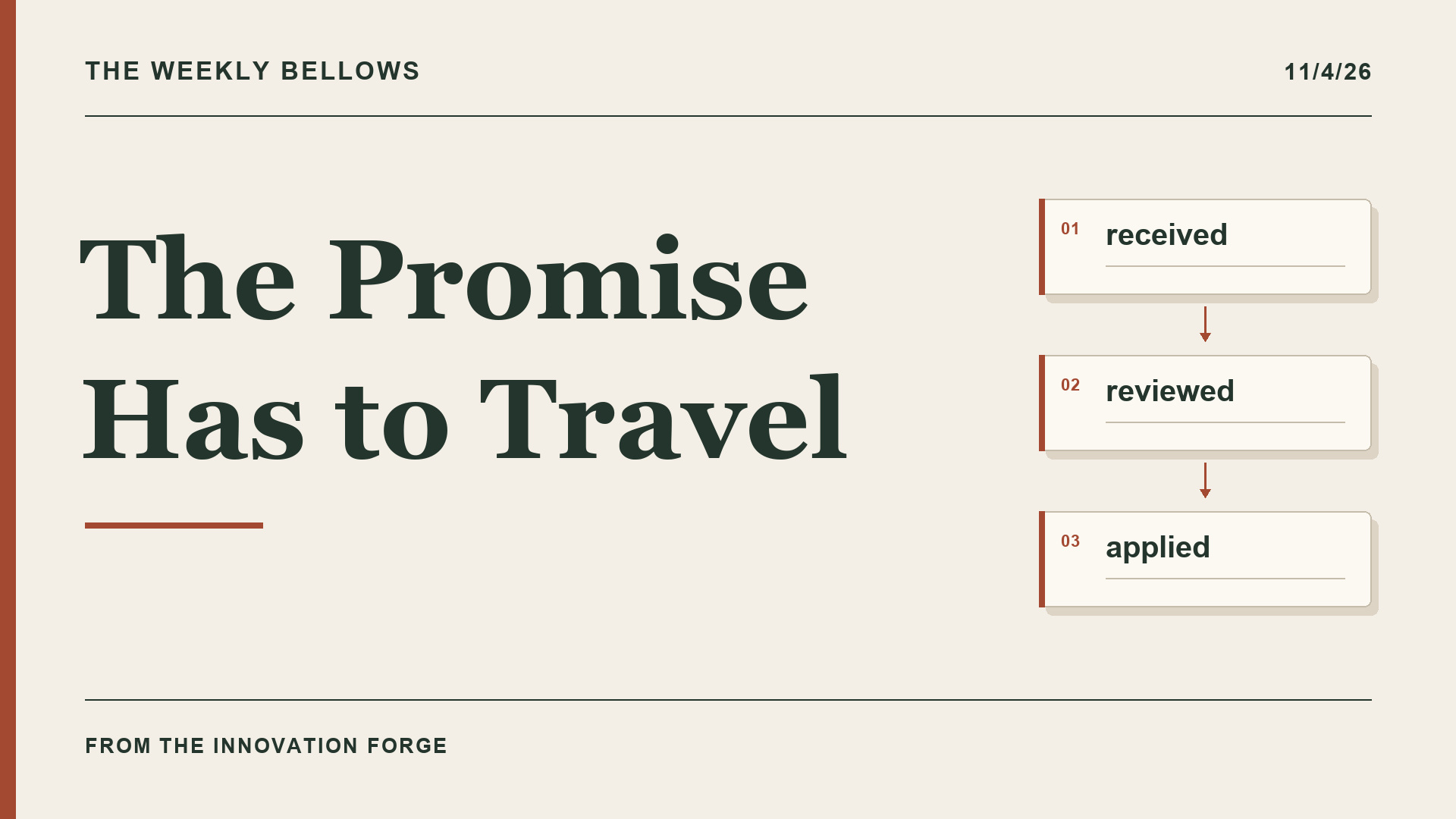
What does "your credits can transfer" actually mean for the person deciding whether to return to college? This week, fictional student Rosa helps us examine the new AIM final rule, its future implementation dates, and the handoffs that connect an enrollment promise to an academic decision. Includes a practical worksheet for tracing one public claim all the way to the answer a student needs. From The Innovation Forge. Sources checked November 4, 2026; fictional scenes are illustrative, and the discussion is general reporting rather than institution-specific legal advice.
Before asking a student for another document, check the reason behind the request. This week pairs federal verification guidance with a careful review of college value claims, using a fictional campus story and a practical two-page worksheet.
An answer can arrive instantly and still leave a student stuck. Follow fictional transfer student Lena through new transfer-planning tools, research on returning students, AI-assisted communication and this week’s policy updates. Includes a practical student-handoff workshop.
What Optional Practical Training means for eligible international students, how it connects study with work, and what the proposed school-paid fees would change. A clear look at eligibility, timing, and the questions campuses should answer now.
Two completed-application reports are nine apart at fictional CRM State. Follow Mara and Ben through reporting definitions, student handoffs, repayment caveats and access responsibilities, guided by recent research and federal notices.
Follow one Related Records pattern through tour-guide follow-up, school visits and event logistics, with practical checks for joins, content blocks and missing context.
Use five questions to connect a Slate build to its decision, owner, evidence, action and review, with a practical test for dashboards, sources and signals.
Turn a working Slate build into shared understanding with role-fit learning, practical teach-back evidence, useful documentation and clear maintenance ownership.
Turn a broad Slate learning goal into one useful project, pairing a primary skill with a related skill and a three-month plan for building, testing and sharing the result.
Turn conference notes into a focused thirty-day Slate action plan with one decision, a process map, clear evidence, an owner, a teaching artifact and a review.
Plan personalized Slate campaigns that a team can explain, test and maintain, with clear audience rules, reliable timing, reusable content and an owner.
Turn a Slate engagement signal into a reviewable outreach policy: separate behavior from interpretation, name the owner, set suppressions and choose a useful measure.
Review a Slate query through row grain, related records and reusable definitions. Use three fictional cases to find assumptions before a list becomes an action.
Build better Slate follow-up with Related Records: tour-guide messages, school-visit replies, and event instructions that follow the right relationship.
Follow the Ongoing Adaptive Deliver Engine live build, explore the logic behind a changing event lineup, and take a small test plan back to your own workbench.
Seven Slate Summit interviews connect responsible AI use, staff learning, identifier mapping and governance with systems that remain useful after the first build.
Help prospective students find community before deposit, keep the summer handoff connected and use student-reported intent responsibly without overstating enrollment effects.
Match email, text and other channels to the student's next step, then check cadence, response time and relevance across the whole communication sequence.
Map the customer journey, improve one touchpoint and build a service routine that combines personal attention, useful follow-up and clear retention measures.
Build a more generous Slate practice with useful peer training, readable information, flexible plans and a regular check that busy work still serves your values.
Improve inquiry-form journeys, build a useful first version and turn troubleshooting into team learning, with Tristan Deveney’s approach to capacity and collaborative Slate work.
Turn everyday Slate tasks into memorable team training with realistic query challenges, peer teaching, clear checks and room to adjust when a knowledge gap appears.
Use Liquid markup in Slate to simplify visit portals and family communications, with practical checks for row grain, dictionary exports, event availability and rendering.
Make Slate systems easier to maintain through clear requirements, mobile-first workflows, documented dependencies and a deliberate division of technical and everyday work.
Turn a first Slate build into useful shared work with seven guests' ideas about learning, manageable releases, usable data, clear instructions and continuing feedback.
Turn a system implementation into workable operations with Kristina Kelpe: student experience, Slate and Workday integration, testing, process maps and proactive data checks.
Separate raw behavior counts, capped points and validation in Excel, then check missing values, statistical relationships and performance on new records.
In this From the Foundry chapter reading, David connects staff expertise, scoring decisions and a practical Slate feedback loop before the engagement rubric takes shape.
Connect transfer notes, credit-review work and staff portal views into a process people can follow, with clear ownership, practical exception handling and useful feedback.
Explore time-anchored behavior counts, login streaks and historical score snapshots in Slate, with practical tests for dates, scope and change over time.
Build inspectable Slate features with event counts, existence flags, click-rate bands and distance, while keeping dates, scope and missing data visible.
Protect learning time, make priorities visible and turn everyday requests into shared knowledge, with practical limits that keep staff empowerment from becoming more work.
Cody Gray, Chris Kwan and Katie Jordan explore creative Slate workflows through staff pain points, trained permissions, maintainable handoffs and community ideas.
Bring the counselor perspective into admissions design: clearer material statuses, usable applications, focused communication and small improvements that make the process easier to navigate.